





TPU Films Enter a New Phase of Surface Engineering
The global thermoplastic polyurethane (TPU) industry is experiencing sustained growth, driven by increasing demand for lightweight, flexible, and high-performance materials across automotive, medical, electronics, and packaging applications.
According to recent market analysis, the global TPU market is projected to grow from USD 2.5 billion in 2026 to USD 3.9 billion by 2033, with a CAGR of 6.8%, reflecting strong expansion in advanced elastomer applications.
Similarly, the TPU films segment is also expected to expand steadily, reaching USD 716.8 million by 2033, driven by automotive and protective film applications. (Source from Grand View Research Thermoplastic Polyurethane (TPU) Market 2026 - 2033)
In this context, surface quality—especially matte appearance and tactile performance—has become a key differentiator in TPU product design.
Industry trends indicate that TPU is no longer used solely for its mechanical performance but is increasingly evolving toward a deeper integration of aesthetics and functionality. Recent industry discussions point to several clear directions, including growing demand for matte TPU surfaces in consumer products, rising preference for soft-touch and skin-like material experiences, increased interest in TPU films with reduced gloss and more consistent surface texture, and the expanding adoption of TPU in wearables and protective films driven by durability and flexibility requirements (Source: Reddit A Fresh Wave of TPU Colors — More Ways to Design, More Ways to Flex).
At the same time, feedback from manufacturing communities highlights persistent limitations in standard TPU materials, such as overly glossy surfaces, inconsistent tactile performance, and difficulty achieving true matte finishes without the use of functional additives (Source: Reddit Matte TPU recommendations). These challenges are accelerating the demand for dedicated surface modification solutions that can simultaneously balance appearance, touch perception, and processing stability.
In response to these evolving market dynamics, material innovation is increasingly shifting toward surface engineering technologies that can be directly integrated into existing TPU processing systems. Rather than relying solely on base resin modifications, manufacturers are now seeking functional additives capable of delivering both aesthetic enhancement and stable processing performance. This transition is accelerating the development of specialized solutions designed to address the growing complexity of TPU application requirements across multiple industries.
What is Matt Effect Masterbatch 3235?
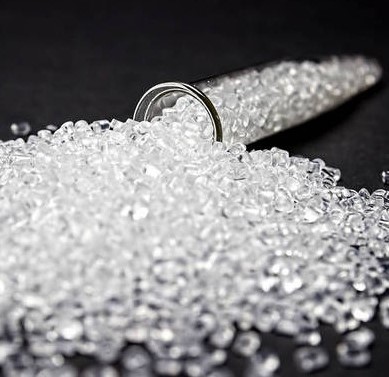
Matt Effect Masterbatch 3235 is a polyether TPU-based functional additive designed for TPU surface modification, developed to enhance both aesthetic and tactile properties in TPU films and molded products.
It enables manufacturers to achieve a matte surface finish without compromising mechanical performance or processing stability.
Key features include:
- Polyether TPU carrier system
- Direct melt blending compatibility
- No granulation required
- Long-term stable performance without precipitation
Technical Advantages of 3235 in TPU Processing

3235 enables uniform matte appearance by modifying surface light scattering behavior in TPU films and molded parts.
This addresses a common industry challenge where TPU surfaces tend to appear overly glossy under standard processing conditions.
Beyond visual improvement, 3235 significantly enhances tactile quality, delivering a soft and silky surface feel.
This aligns with growing market demand for comfort-driven materials in wearables, consumer electronics, and flexible interfaces.
The additive structure also contributes to improved durability, making TPU products more resistant to abrasion and surface damage during long-term use.
Unlike conventional surface modifiers that may migrate or bloom over time, 3235 maintains stable dispersion and avoids precipitation issues.
This ensures consistent production quality in continuous industrial processing environments.
3235 is designed for direct blending into TPU systems without requiring pre-compounding or granulation steps.
It is compatible with:
- Extrusion processing
- Injection molding
- TPU film casting
The Test Data & Performance Comparison of Matt Effect Masterbatch 3235 demonstrates its effectiveness in optimizing the optical and surface properties of TPU films under standardized processing conditions. In the evaluation, 10% of 3235 was uniformly blended with polyester TPU and then directly cast into a 10-micron film, after which key parameters such as haze, light transmittance, and surface gloss were measured and compared against a conventional matte TPU reference material. The results indicate that 3235 enables a more controlled light-scattering behavior within the TPU matrix, contributing to a stable matte appearance while maintaining balanced transparency and overall optical consistency. At the same time, the material preserves smooth processing behavior during melt blending and film extrusion, ensuring that surface enhancement can be achieved without compromising production stability or requiring additional post-treatment steps.


The expansion of TPU films in automotive interiors, protective films, and wearable devices is accelerating globally. According to industry forecasts from Grand View Research (Thermoplastic Polyurethane (TPU) Market 2026–2033), the automotive sector remains the largest application segment, accounting for over 25% of global TPU film demand, driven by lightweight design trends and the increasing need for scratch-resistant, durable surfaces. At the same time, TPU films are gaining wider adoption in EV interior components, protective coatings, flexible electronics, and medical-grade film applications, where both surface aesthetics and tactile performance are becoming increasingly critical design parameters.
However, community and industry feedback—including discussions among TPU users and manufacturers on Reddit (A true matte finish TPU or TPE?)—highlights persistent challenges such as difficulty achieving true matte surfaces, overly glossy finishes in standard TPU grades, and trade-offs between softness, mechanical strength, and processing stability in thin-film applications. Against this backdrop, Matt Effect Masterbatch 3235 offers a balanced solution that integrates enhanced surface aesthetics, soft-touch performance, and stable processing behavior. As TPU continues to evolve from a purely functional polymer into a design-driven engineering material, manufacturers are under increasing pressure to simultaneously optimize mechanical performance, visual appearance, tactile experience, and production efficiency. In this context, 3235 provides a scalable and practical pathway to achieve these requirements without modifying the base TPU formulation.
A Step Forward in TPU Surface Engineering
Matt Effect Masterbatch 3235 represents a new generation of TPU modification technology, aligned with the global shift toward high-performance, visually refined, and consumer-oriented flexible materials.
Supported by strong TPU market growth and increasing demand for matte, soft-touch surfaces, it offers manufacturers a practical and scalable solution for next-generation TPU applications.
Contact
SILIKE Silicone Materials Team
Website: https://www.si-tpv.com/
Email: amy.wang@silike.cn
Inquiry: Available via official website contact form
Related News
-

Emerging Haptic Technologies Necessar...
-
What are the existing and emerging al...
-

Innovations made of EVA foam: The Tec...
-

Suppliers of Sustainable and Eco-Frie...
-

How to make apparel and accessories a...
-
A Shower of Solutions: Rethinking Cha...
-

Eco-Comfort: Si-TPV’s Soft Solu...
-

Empowering Electric Vehicles: Innovat...
-
From TPE to Si-TPV: An Attractive in ...
-
Future-Forward Comfort: Exploring Inn...
-

Hand Grip Solutions: Explore differen...
-
How to reduce the hardness and enhanc...

